Choosing upholstery fabric is one of the most consequential decisions in any interior scheme. The fabric you select will determine how a room feels to sit in, how it ages, how light plays across its surfaces, and, practically, how it holds up against the realities of daily life. A poorly chosen fabric on a beautifully made sofa is a waste of good craftsmanship. A well-chosen one becomes more beautiful with time.
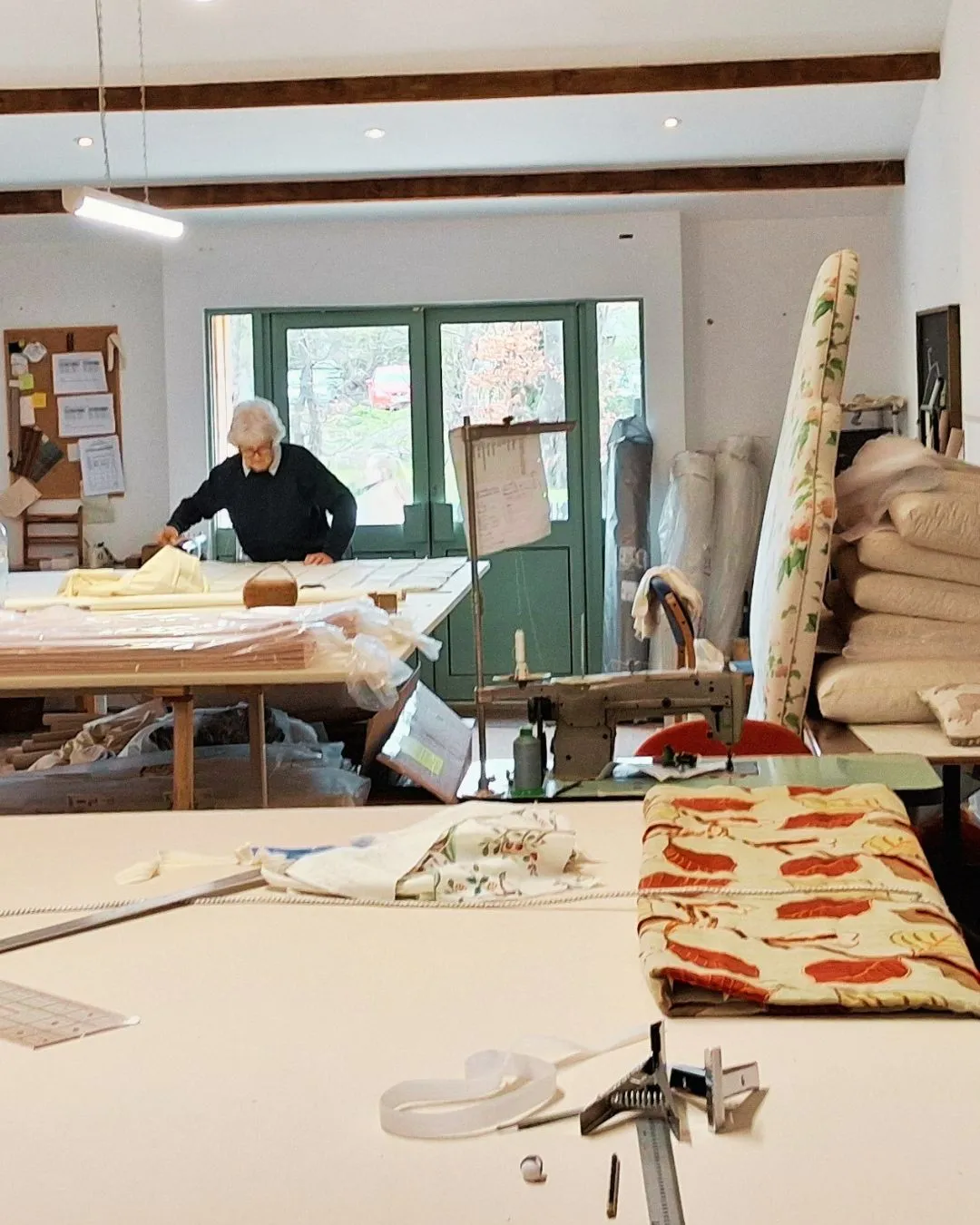
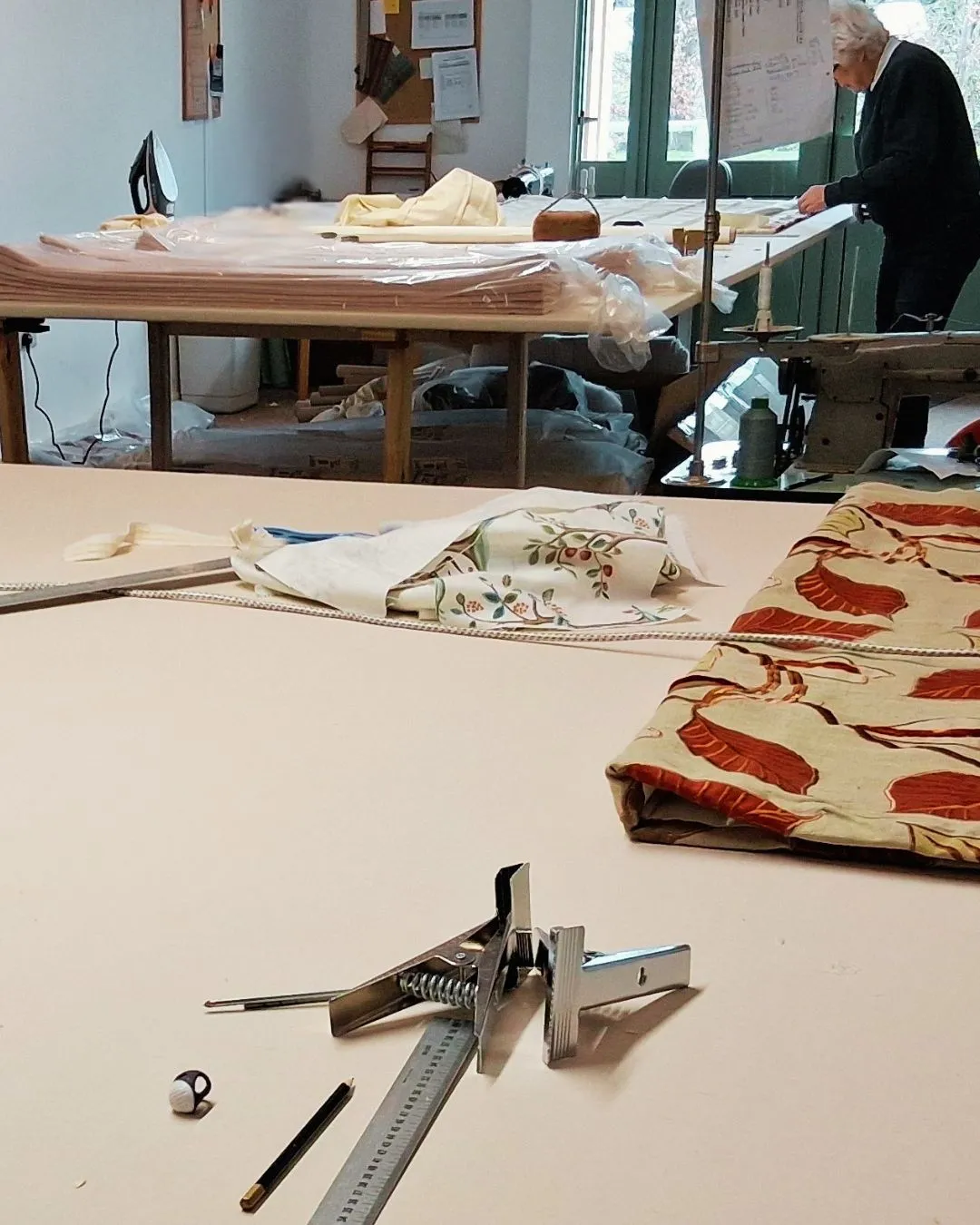
In our Broadway workshop, we've been upholstering furniture by hand for more than eighty years. We've seen what lasts, what fades, what pills after a season, and what still looks impeccable after a decade. This guide draws on that experience: not theory, but the accumulated knowledge of working with fabric every day.
Start with how the piece will be used
Before considering colour or pattern, ask a more fundamental question: how will this piece of furniture actually be lived with?
A sofa in a family kitchen that absorbs the full force of children, dogs, and Sunday lunches needs a very different fabric from an occasional chair in a formal drawing room that might be sat on twice a week. Both deserve to look beautiful, but they have entirely different jobs to do.
We always begin here with our clients. It sounds obvious, but the most common mistake we see is choosing fabric with the eyes alone. The second question, how it will wear, is the one that saves heartache later.
Understanding the Martindale rub test
The Martindale test is the industry standard for measuring fabric durability in the UK. A mechanical arm rubs the fabric under controlled pressure until the fibres begin to break down. The result is expressed as a number: the higher the number, the more resilient the fabric.
As a rough guide from our experience in the workshop:
Under 10,000 rubs: decorative use only. Cushion covers, bolsters, pieces that are admired rather than sat on. Fine silks and delicate printed linens often fall here.
10,000 to 20,000 rubs: occasional use. An armchair in a bedroom, a window seat in a guest room, a decorative stool. Pieces that see gentle, intermittent use.
20,000 to 30,000 rubs: everyday domestic use. The family sofa, dining chairs, a reading chair by the fire. This is where most residential upholstery should sit.
30,000 rubs and above: heavy domestic and light commercial use. Pieces in high-traffic areas, mudrooms, boot rooms, or for clients who simply want the most durable option regardless of setting. Hotel lobbies and restaurant seating typically specify here.
A number alone doesn't tell the whole story, since weave structure, fibre content, and finish all play a role, but it's a sensible starting point. We always check the Martindale rating before recommending a fabric for upholstery, and we'd encourage you to do the same.
Natural fabrics: the options
In a country house setting, natural fabrics are almost always our first instinct. They age with character, they feel good to the touch, and they sit comfortably within interiors that lean on texture and warmth rather than high-gloss finishes.
Linen is the fabric we reach for most often. It has a beautiful dry hand, it softens with use, and it takes dye in a way that produces the most wonderful muted, chalky tones. The natural creasing is part of its appeal: a linen-covered sofa looks relaxed and inviting rather than rigid. We typically recommend linen-cotton blends for upholstery, as pure linen alone can be too soft for structured seating. Look for a Martindale rating above 20,000.
Wool is exceptional for durability. It's naturally resilient, resistant to pilling, and has an inherent warmth that makes it ideal for colder months and stone-floored rooms, which, in the Cotswolds, is most rooms. A good wool tweed or flannel will outlast almost any other natural fibre on a working sofa. We use wool extensively for pieces in hallways, studies, and family rooms.
Velvet, specifically cotton velvet, brings depth and richness to a scheme. The way it catches and reflects light is unmatched. The common concern is that velvet marks easily, and with cheaper velvets this can be true. But a well-made cotton or viscose velvet with a Martindale rating above 30,000 is surprisingly hardy. We've used it on family sofas that look as good five years on as they did on day one.
Silk we use sparingly and with clear intent. It's exquisite on a formal dining chair or an antique bedroom piece, but it has no place on a sofa that sees daily use. We'll always advise clients honestly about where silk will thrive and where it will simply suffer.
The case for performance fabrics
There's a perception that performance fabrics, the new generation of stain-resistant, fade-resistant textiles, are somehow inferior to natural fibres. In our experience, that's increasingly untrue. The technology has advanced considerably, and several fabric houses now produce performance linens and velvets that are virtually indistinguishable from their natural counterparts in appearance and feel.
For families with young children, for pieces near kitchen areas, or for clients who entertain frequently, we often recommend a performance fabric without apology. A sofa that can be wiped clean after a glass of red wine is not a compromise. It's intelligent design.
The key is choosing performance fabrics from reputable houses where the hand and drape have been carefully considered, not the stiff, plastic-feeling textiles of a decade ago. We stock several in our Broadway showroom, and we always invite clients to feel the difference for themselves.
Colour, pattern, and the scheme
Once you've established the practical requirements of rub count, fibre type, and performance needs, you can begin thinking about colour and pattern. Here, context is everything.
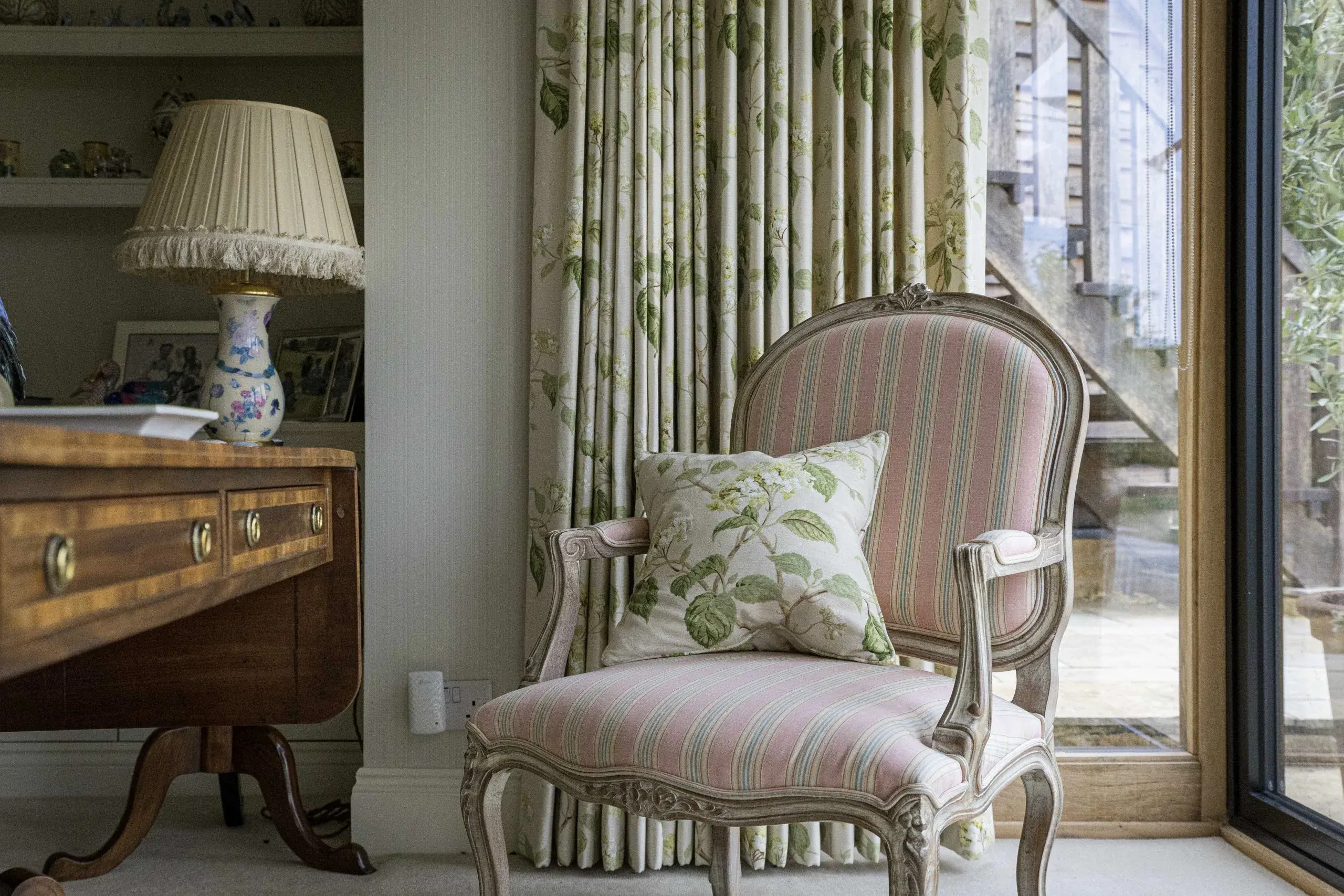
A fabric doesn't exist in isolation. It exists in relation to the walls, the floor, the light, and every other surface in the room. We always recommend seeing fabrics in situ before committing: a colour that looks perfect under the fluorescent lights of a sample book can look entirely different in a north-facing Cotswold sitting room on a grey February afternoon.
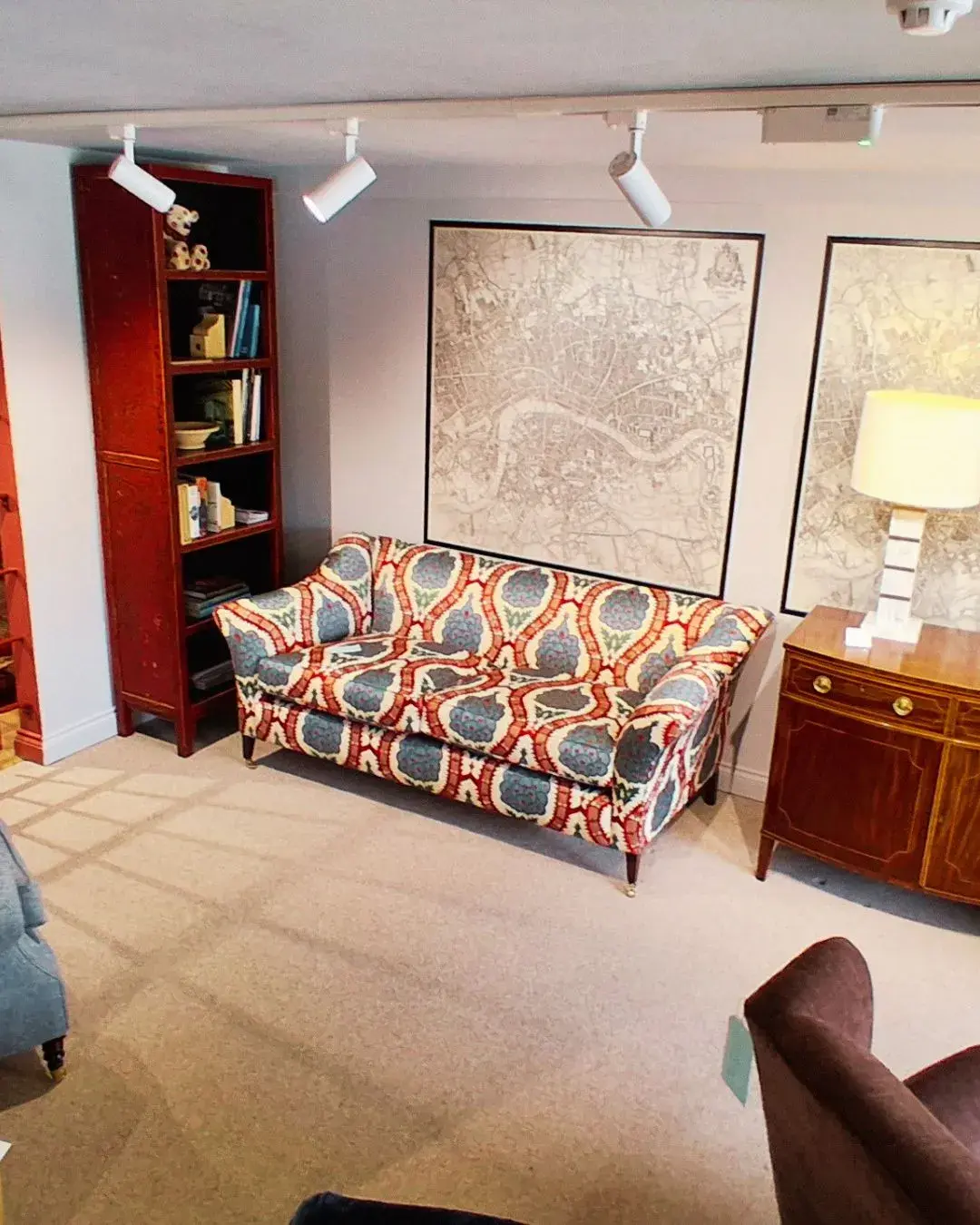
Large-scale patterns work best on generously proportioned furniture where the repeat has room to express itself. A bold floral on a compact two-seater will look cramped; the same fabric on a deep three-seater can be magnificent. Conversely, a ticking stripe or small geometric can bring quiet interest to a smaller piece without overwhelming it.
We tend to advocate for a considered palette of no more than three or four fabrics within a single room: a primary upholstery fabric, a secondary for accent pieces, and one or two for cushions and window treatments. Discipline here produces calm, cohesive rooms rather than rooms that feel busy.
What we'd suggest
If you're starting from scratch and want a single, reliable approach: choose a heavy linen-cotton blend in a neutral tone for your main seating, add depth with a wool or velvet on an accent chair, and bring personality through cushions and throws where the commitment is lower and the fabric can be more adventurous. The plains, checks and tickings in our upholstery fabric range are chosen with exactly this approach in mind.
If you'd like to discuss fabric options for a specific project, our showroom at the Cotswold Design Centre in Broadway has an extensive library of samples from the fabric houses we work with. You're welcome to visit: seeing and touching the fabric is always better than choosing from a screen.