Sit on a well-made sofa — one with a hand-sprung seat — and something registers immediately, even if you can't quite articulate what. The seat responds to you. It gives, but it supports. There's a resilience underneath that holds its shape without rigidity. It feels, in a word, right.
Now sit on something built with a serpentine spring unit or a foam slab on a webbing base. The difference is not subtle. One feels engineered for comfort; the other feels engineered for price.
In our Broadway workshop, we still build seats the way they were built a century ago — with individual coil springs, hand-lashed in an eight-way tie pattern. It takes longer. It costs more. And it produces a seat that no modern shortcut has managed to replicate.
The layers, from the bottom up
A hand-sprung seat is built in layers, each with a specific purpose. Understanding what's inside helps explain why the finished piece feels the way it does.
The webbing. The foundation is a grid of jute webbing, stretched taut across the bottom of the seat frame and tacked in place. This is what the springs sit on. The webbing must be tensioned correctly — too loose and the seat will sag; too tight and there's no give for the springs to work against. Getting this right is a matter of feel and experience.
The springs. Individual double-cone coil springs are positioned on the webbing grid, spaced evenly across the seat. The gauge and height of the spring are selected based on the intended firmness and the depth of the seat. We use heavier gauge springs for seats that need more support and softer gauges where a gentler sit is required.
The eight-way tie. This is the defining technique. Each spring is tied to its neighbours and to the frame using strong laid cord, in eight directions: front to back, side to side, and on both diagonals. This creates a unified sprung platform where every spring works in concert with its neighbours. When you sit down, the load is distributed evenly across the entire seat rather than concentrated on the springs directly beneath you.
Tying springs is skilled, physical work. Each knot must be secure, each cord tensioned to the right degree. Too tight and the springs can't compress properly. Too loose and the seat feels uneven. An experienced upholsterer ties by feel, adjusting tension as they work across the seat, checking the surface with their hand for consistency.
The hessian. A layer of heavy hessian is stretched over the tied springs and stitched down. This creates a stable surface for the layers above and prevents the filling from working down into the springs.
The filling. Traditionally, this is horsehair — teased and layered to create an even surface. Horsehair is naturally resilient: it compresses under weight and springs back when the weight is removed, and it doesn't flatten permanently the way synthetic fillings can. We still use horsehair on commissions where the client wants the firmest, most traditional seat. For a softer feel, we layer combinations of hair, cotton felt, and wadding.
The calico. A layer of unbleached calico is stretched over the filling, pulled tight, and tacked to the frame. This shapes the seat — pulling in the edges, creating a smooth, even surface. The calico stage is where the upholsterer's eye matters most. Small adjustments here determine whether the finished seat looks crisp and intentional or lumpy and approximate.
The top cover. Finally, the chosen fabric is applied over the calico. On a hand-sprung seat, the fabric sits on a surface that has been meticulously shaped and tensioned. It lies flat, it doesn't pull, and it ages evenly because the structure underneath is sound.
Why it matters
The honest answer is that most people will never see any of this. The springs, the horsehair, the eight-way ties — they're hidden the moment the top cover goes on. But you feel them every time you sit down. And you'll still feel them in twenty years, which is more than can be said for most modern alternatives.
A serpentine spring — the S-shaped wire used in most factory-made furniture — does a reasonable job for a few years. But it fatigues. The wire loses its tension, the seat develops soft spots, and eventually the support becomes uneven. A foam block on webbing is cheaper still, and it degrades faster. The foam oxidises, compresses permanently, and after five to seven years the seat is a shadow of what it was.
A hand-sprung seat, properly built, will outlast the fabric on top of it many times over. We regularly re-upholster pieces where the frame and springs are decades old and still perfectly sound. The client gets a sofa that looks and feels entirely new, on bones that have already proved themselves.
A disappearing skill
Hand-springing is not taught widely. It takes years to learn properly, and few young upholsterers have the opportunity — or the patience — to develop the skill. Most modern upholstery training focuses on techniques suited to factory production: pre-built spring units, staple guns, and machine-cut foam.
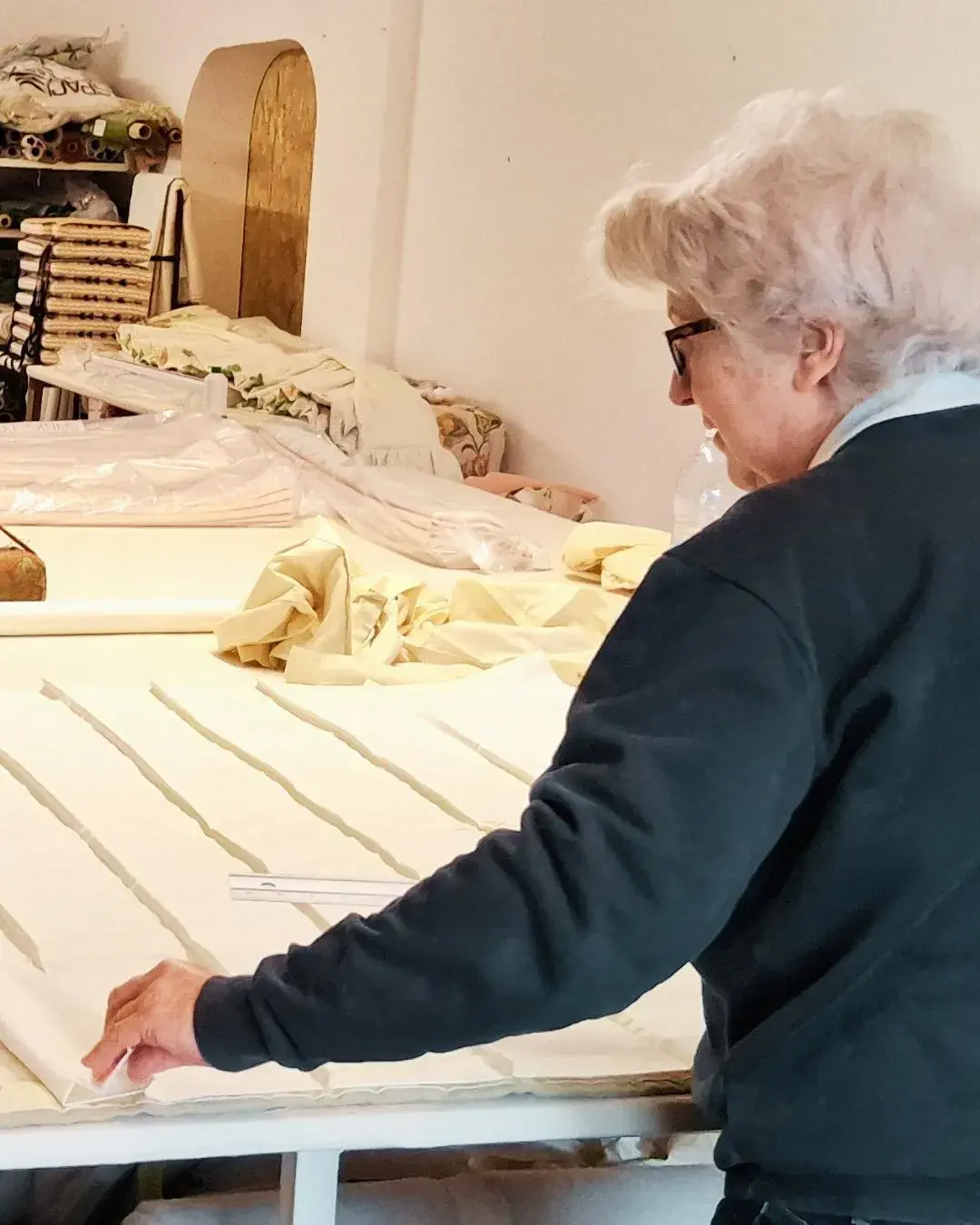
We're fortunate to have upholsterers in our workshop who trained traditionally and who have passed their methods to the next generation within the team. It's not a romanticised notion — it's a practical reality. If these techniques aren't practised and taught, they disappear. A hand-sprung seat built in our workshop in 2026 is made the same way a seat was built in 1926. We think that's worth preserving.