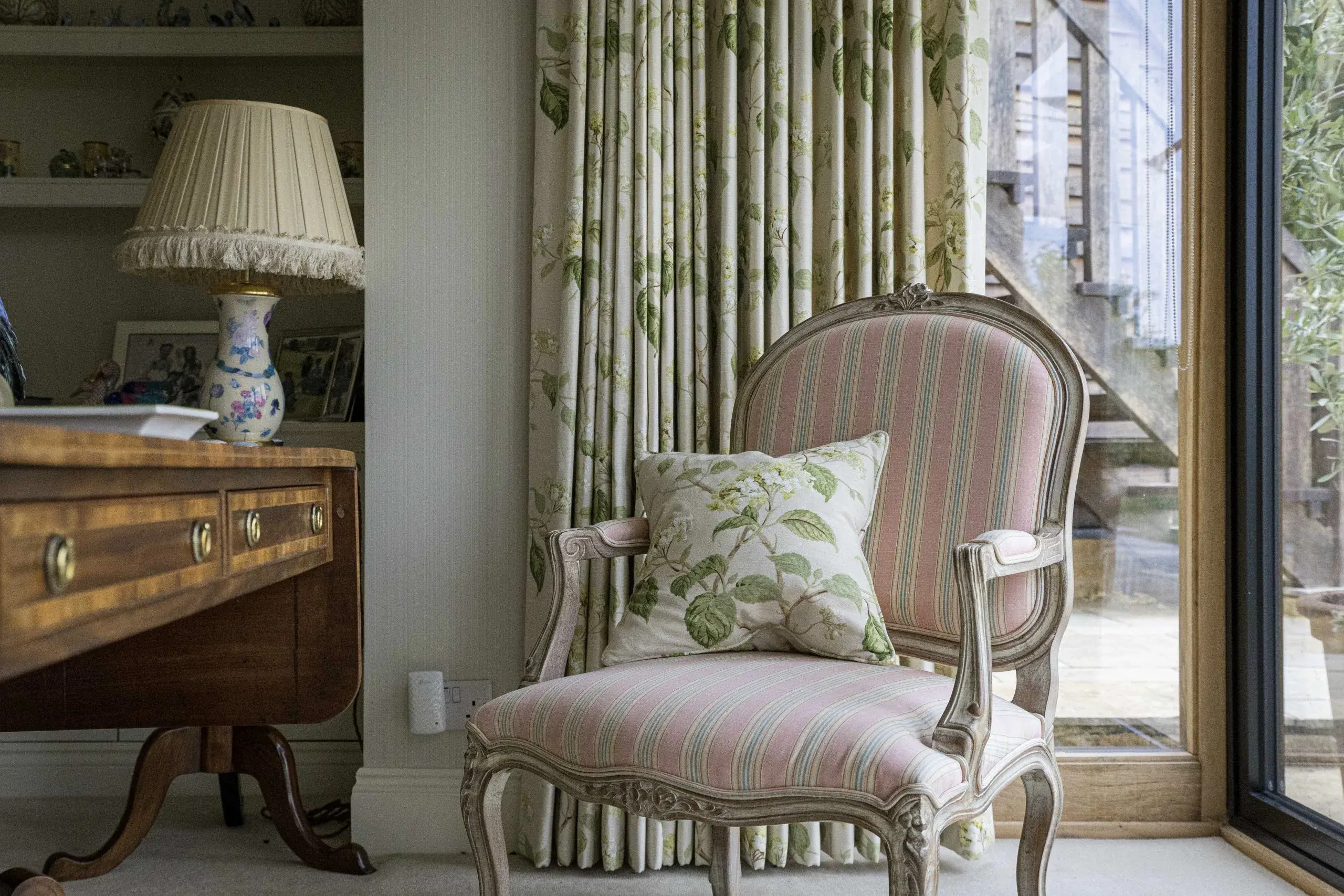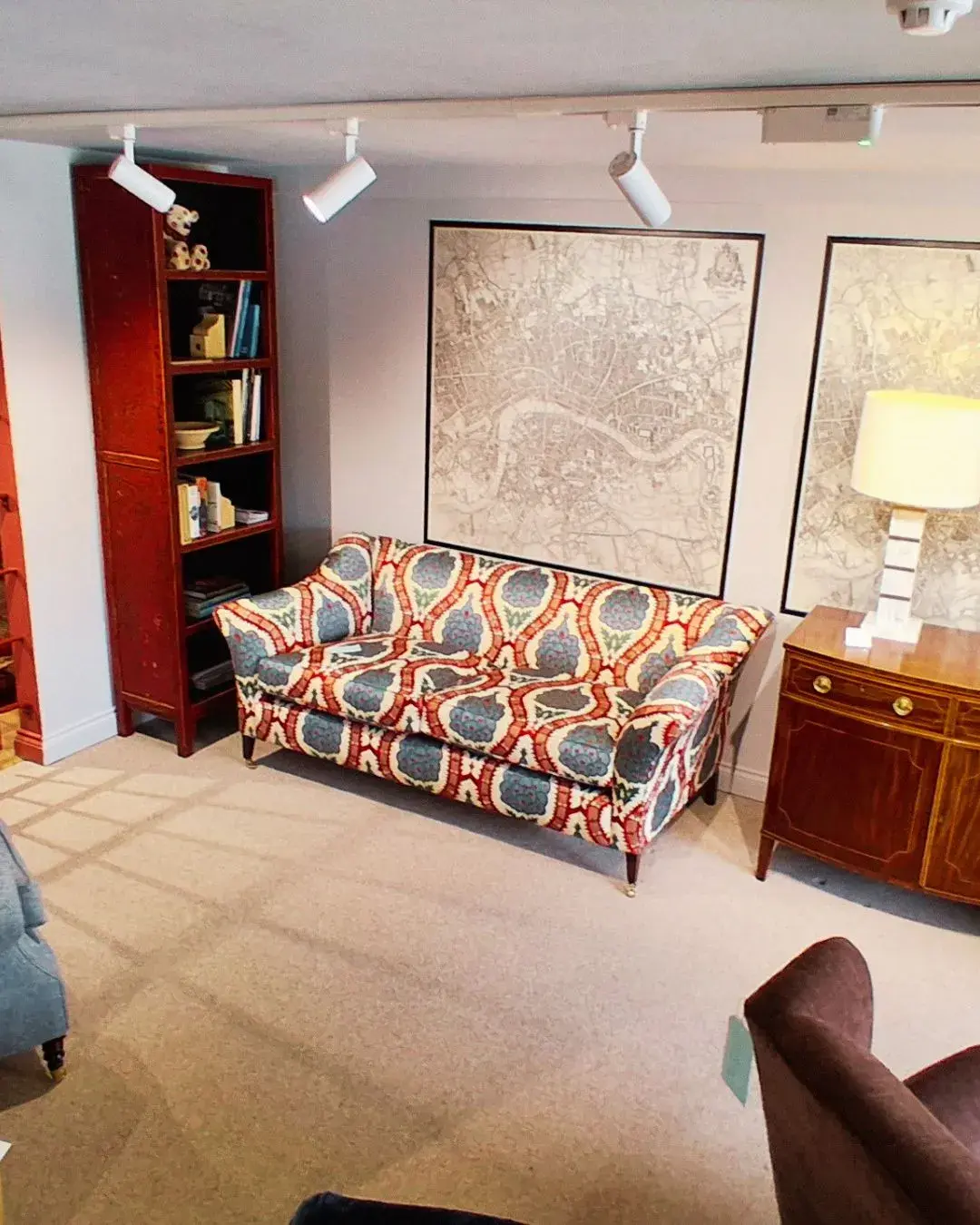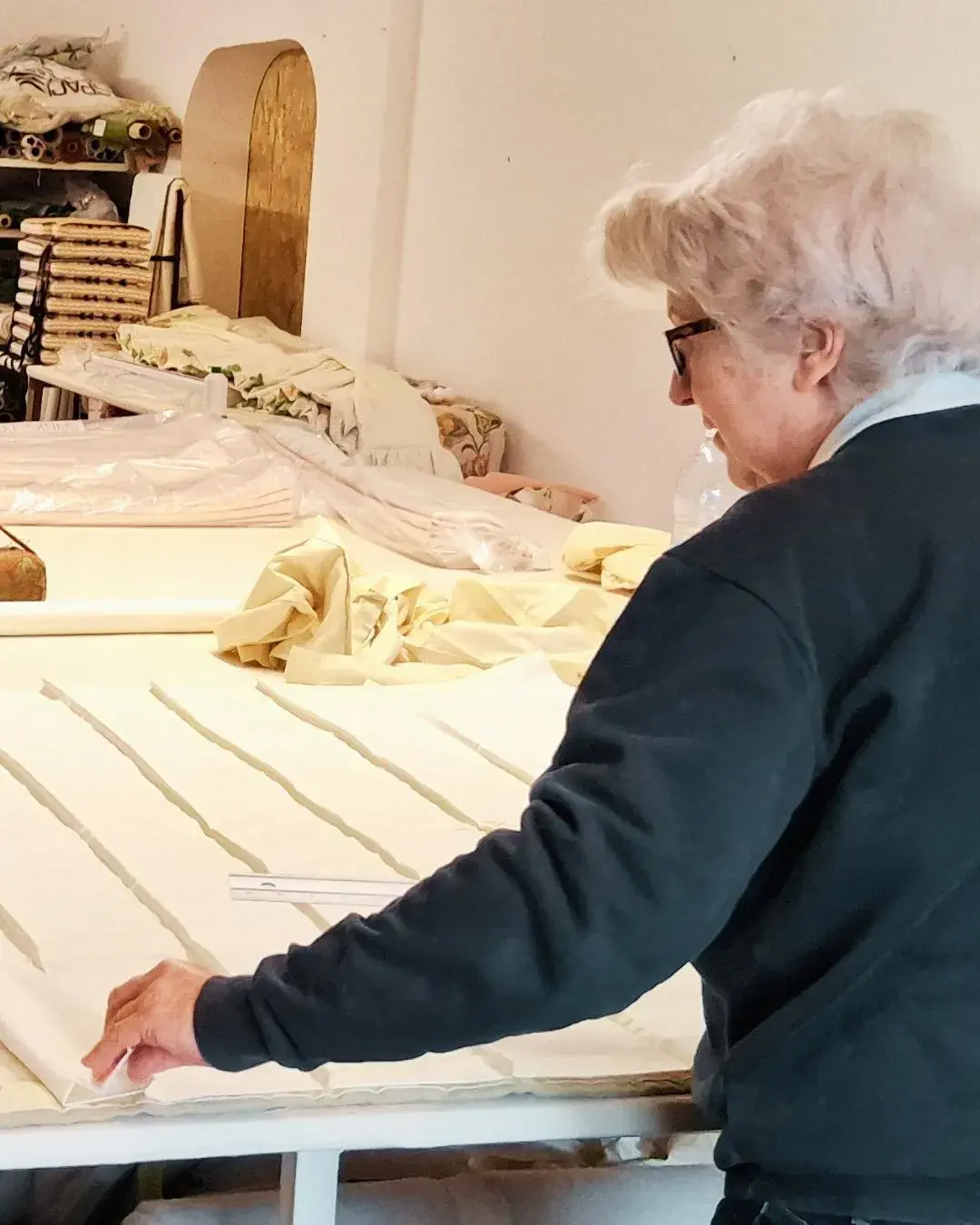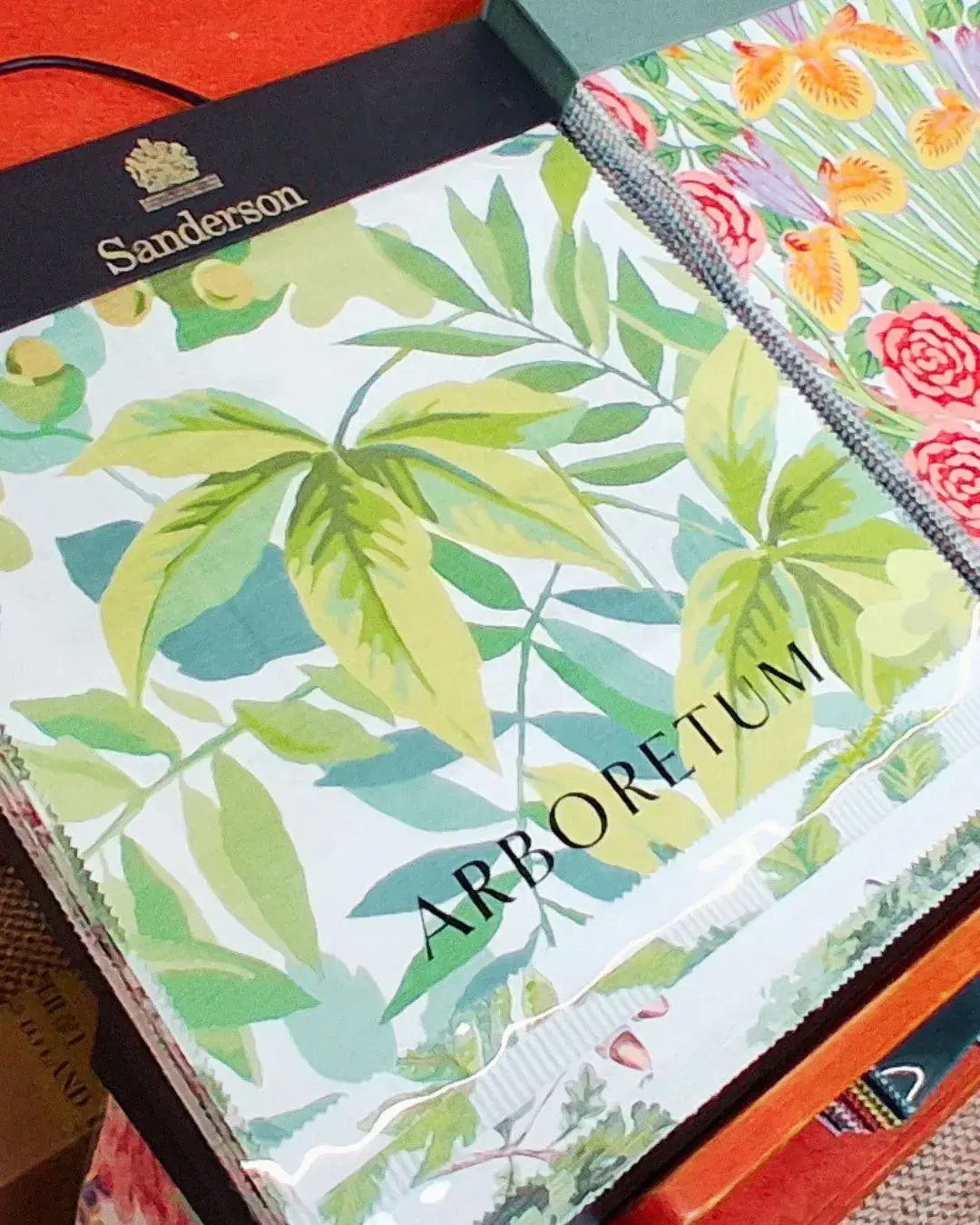
Walk into our Broadway showroom and run your hand along the fabric drawers. You'll feel the difference between materials before you see it: the dry crispness of a Belgian linen, the dense pile of a cotton velvet, the springy warmth of a Scottish wool. Each fabric has its own character, and understanding that character is the starting point for choosing well.
We work almost exclusively with natural fabrics. Not out of ideology, but because in more than eighty years of making we've found that natural fibres produce the most beautiful, most comfortable, and most enduring results. They age with grace rather than deterioration. They feel better against the skin. And they bring a depth and texture to a room that synthetic alternatives struggle to match.
Here's what we know about the fabrics we use most. The plains, checks and tickings in our range of upholstery fabrics are woven from these same fibres.
Linen
Linen is the fabric we recommend more than any other for upholstery. It has qualities that make it almost uniquely suited to the task: it's strong, it's breathable, it softens with age, and it takes dye in a way that produces colours of remarkable subtlety: those chalky, muted tones that feel inherently Cotswold.
The natural creasing of linen is part of its appeal. A linen-covered sofa looks lived in from the first day, in the best possible sense. It doesn't pretend to be something it's not. This relaxed quality makes it the natural choice for country houses, informal sitting rooms, and any space where comfort matters more than formality.
For upholstery, we generally recommend linen-cotton blends rather than pure linen. The cotton adds structure and improves the Martindale rub count: a pure linen at 15,000 rubs becomes a linen-cotton blend at 25,000 or above. The feel remains distinctly linen; the performance improves meaningfully.
Our preferred weight for upholstery is around 350–450 gsm. Lighter linens work beautifully for curtains and cushion covers but lack the substance to hold their shape on a structured piece. When in doubt, go heavier: you lose nothing in appearance and gain considerably in longevity.
Where it works best: Family sofas, deep armchairs, window seats, informal dining chairs. Anywhere you want warmth and texture without pretension.
Where to be cautious: Very formal settings where a crisper drape is needed. Pure white or very pale linens in households with young children (a linen in putty or stone, however, hides everyday life remarkably well).
Velvet
Velvet brings depth to a room in a way nothing else quite manages. The way it absorbs and reflects light, shifting tone as you move around a piece, gives upholstered furniture a richness and presence that flat-weave fabrics can't achieve. A velvet armchair by a fire on a dark evening is one of the great pleasures of domestic life.
The common anxiety about velvet is marking. And with cheaper velvets, particularly viscose pile on a lightweight backing, this concern is justified. They crush, they mark where you sit, and they show every brush of a hand. But a well-made cotton velvet or a mohair velvet with a Martindale rating above 30,000 is a different proposition entirely. These fabrics are genuinely hard-wearing. We've used them on family sofas that look as good after five years of daily use as they did on the day of delivery.
The weight and pile density matter enormously. A good upholstery velvet should feel dense and substantial in the hand, not thin or papery. The pile should spring back when you press your thumb into it. We stock several cotton velvets in the showroom that meet these standards, and we always encourage clients to handle them before committing.
Where it works best: Feature armchairs, chesterfield sofas, bedroom headboards, dining chairs in more formal settings. Velvet loves a room with good light, natural or artificial, where its tonal shifts can be appreciated.
Where to be cautious: Very sunny rooms where prolonged direct light can cause uneven fading. Households with cats, who find velvet irresistible.
Wool
Wool is the workhorse of British upholstery and has been for centuries. It is quietly exceptional: naturally resilient, resistant to pilling, flame-retardant without chemical treatment, and warm to the touch even when the stone floor beneath it is freezing. In a Cotswold house, where stone floors and draughty windows are facts of life, wool earns its place.
A good wool tweed or flannel is extraordinarily durable. Martindale ratings routinely exceed 40,000, and the fabric maintains its appearance far longer than most alternatives. Wool also accepts dye beautifully: the depth of colour in a well-dyed wool is richer and more complex than the same shade in a cotton or linen.
We use wool extensively for pieces that need to work hard: hallway benches, studies, boot rooms, and kitchen seating. It's also our recommendation for anyone who wants a plain upholstery fabric that won't show every mark and crease: the natural texture of a wool weave is forgiving in a way that smooth fabrics are not.
Where it works best: High-traffic seating, cold rooms, country house studies and libraries, any piece where durability is paramount.
Where to be cautious: Bedrooms and spaces where a softer, more relaxed feel is wanted. Wool can feel too structured for a casual reading chair, though a wool-and-linen blend softens this considerably.
Cotton
Cotton is the foundation fabric: versatile, workable, and widely available. On its own, a heavy cotton canvas or duck cloth makes perfectly serviceable upholstery, though it lacks the distinctive character of linen or the depth of velvet. Where cotton excels is in blends: cotton-linen for added strength, cotton-velvet for pile fabrics, and cotton-wool for softened worsteds.
We use cotton most often for loose covers: the removable slipcovers that can be washed and replaced as needed. For a house with children or dogs, a beautifully cut loose cover in a washed cotton is one of the most practical choices available. It can be removed, cleaned, and put back without any loss of appearance.
Where it works best: Loose covers, casual sofas, slipcovers for seasonal change. Cotton chintz remains a classic for cottage-style curtains and lighter upholstery.
Silk
We use silk deliberately and sparingly. It is beautiful beyond question, with its lustre, its drape, and the way it catches even the faintest light, but it is not a forgiving fabric. It fades in direct sunlight, it marks with moisture, and it wears at pressure points.
In the right setting, silk is unmatched. An antique dining chair recovered in a heavy dupion silk. A bedroom cushion. A bolster on a daybed in a room that gets gentle, filtered light. These are the applications where silk earns its place: as a considered accent, not a primary upholstery fabric.
We would never recommend silk for a sofa or any piece subjected to daily use. But for the right moment, in the right room, nothing else comes close.