There's a moment, early in most projects, when a client asks about a sofa. Sometimes they know exactly what they want: a Howard, a Knole, a deep-seated chesterfield. More often, they know how they want it to feel: generous, inviting, something the family will gravitate toward. The specifics of dimensions, depth, arm height and cushion fill come later, through conversation.
Commissioning a bespoke sofa is not the same as buying one from a showroom. It's a collaborative process that typically takes eight to twelve weeks from first discussion to delivery, and the result is a piece of furniture made specifically for your room, your needs, and your taste. Here's how it works in our Broadway workshop.
The conversation
Every commission begins with a discussion about the space. We want to understand not just the room's dimensions but its character: how light falls through the windows, what the flooring is, what other furniture will share the space, and how the room is actually used. A sofa for a formal drawing room that hosts occasional guests is a fundamentally different proposition from one in a kitchen-living space where three children do homework while supper is being made.
We'll talk about proportions. Seat depth is one of the most overlooked dimensions: anything below 800mm feels restrictive, and we generally aim for 950mm and above for real comfort. Arm height matters too, particularly if people like to lie down and read. Back cushion firmness is personal. These are the details that separate a sofa you tolerate from one you love.
At this stage, we'll usually sketch out the piece and discuss frame options. We build frames from kiln-dried beech, a hardwood that takes the strain of daily use without warping or creaking over time.
Choosing the fabric
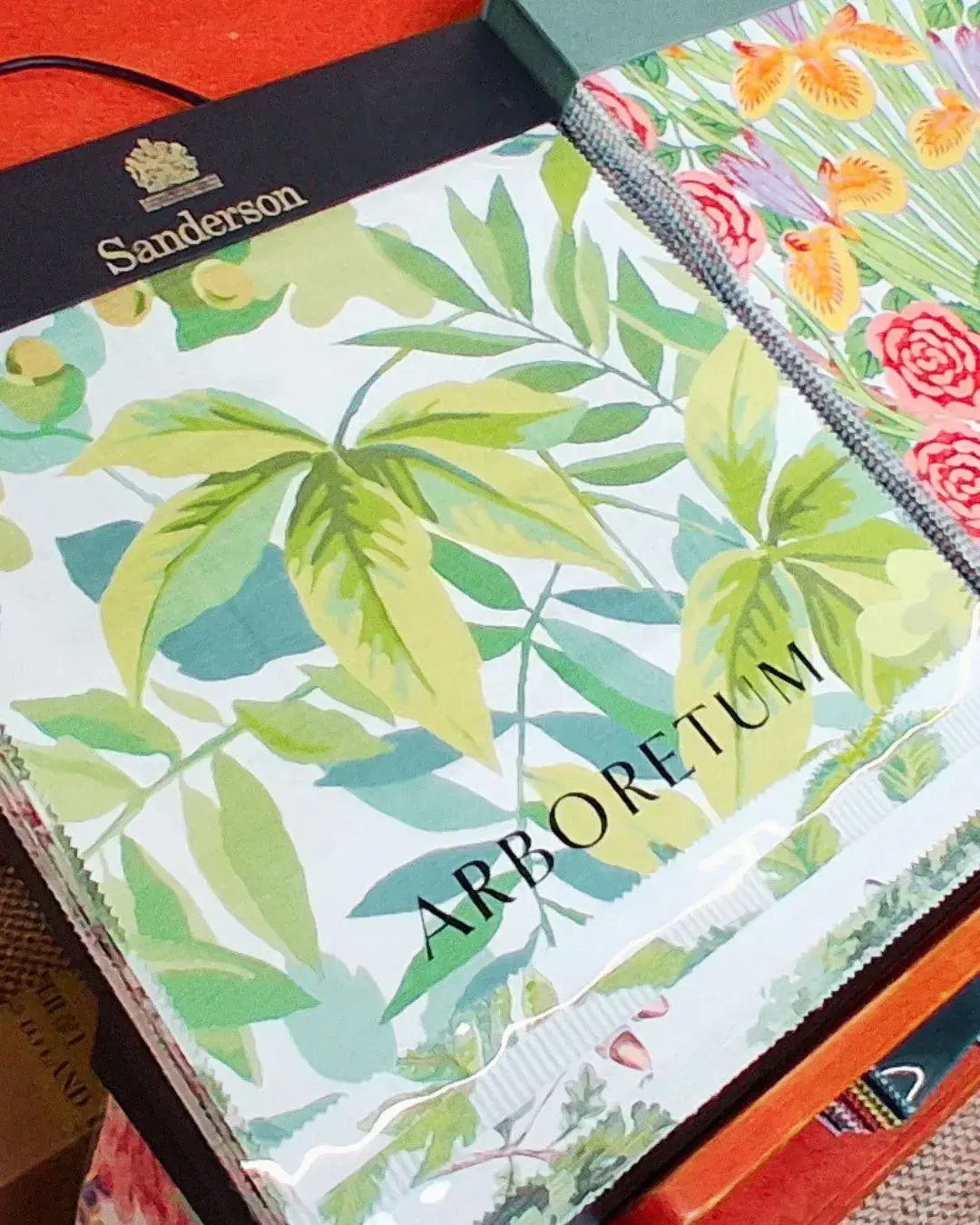
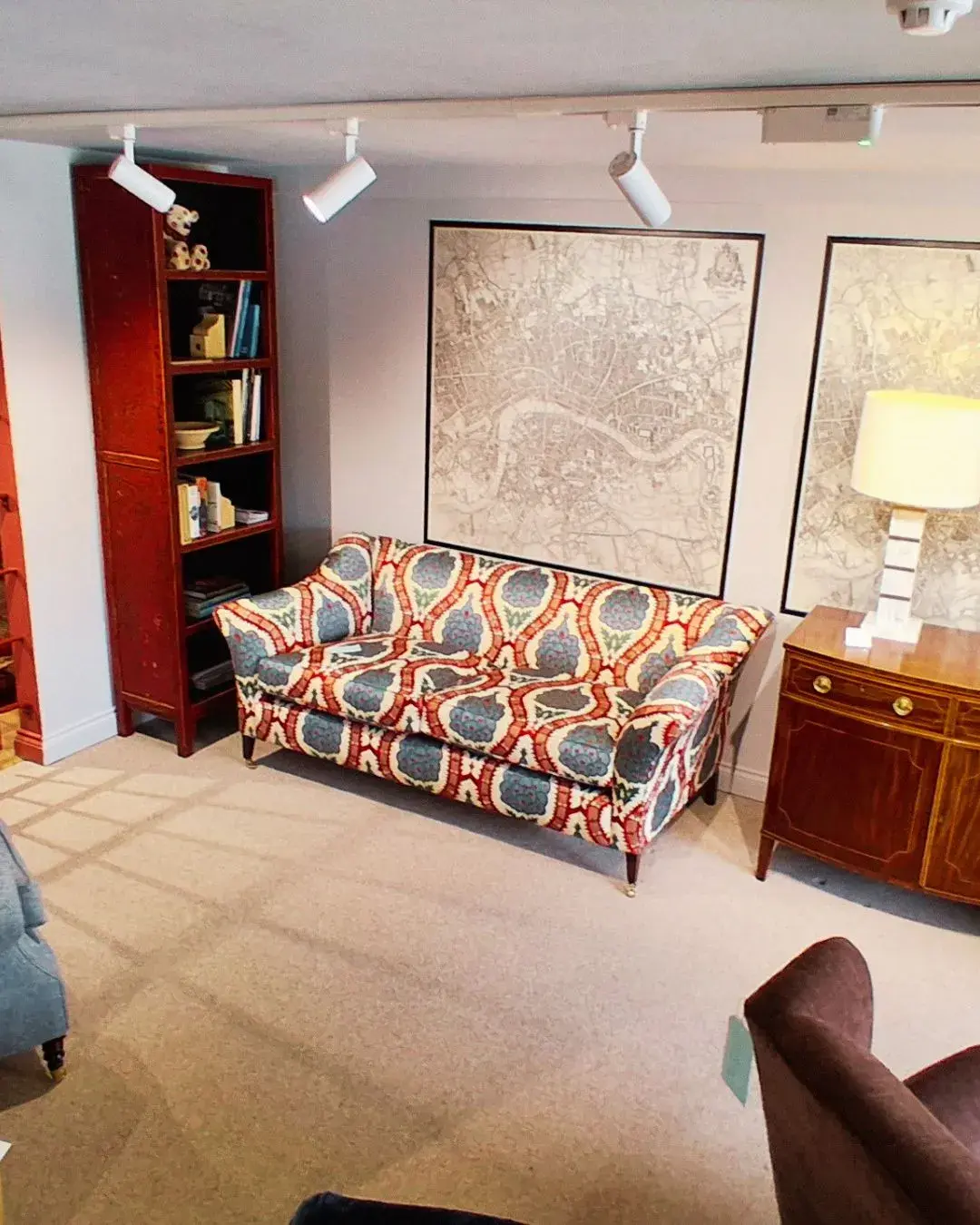
With the shape and scale agreed, we move to fabric. This is where the showroom earns its place: clients come in, sit with us, and work through the options with the actual material in their hands. A swatch in a book gives you colour and pattern. A full metre draped over a frame gives you drape, weight, and the way light moves across the surface. There's no substitute for seeing fabric at scale. Many clients start with our upholstery fabric range, plains in fourteen colours with checks, stripes and tickings woven to match, before narrowing the choice in the showroom.
We'll advise on practicality: the Martindale rub count, whether a fabric benefits from a stain treatment, how it will age. And we'll be honest if we think a particular choice won't serve well in the intended setting. We'd rather guide a client toward a fabric they'll still love in ten years than agree to something we know will disappoint.
Building the frame
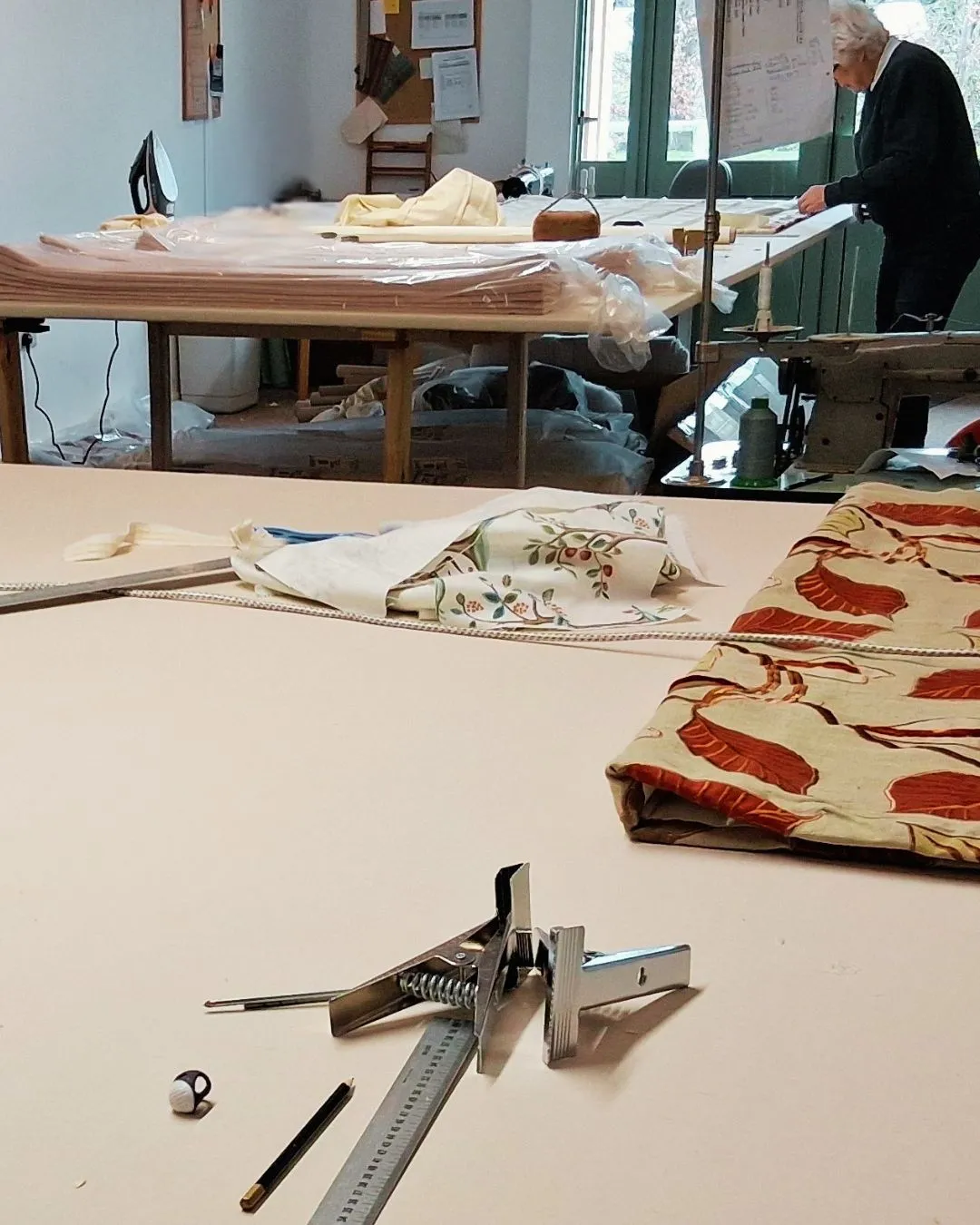
The frame is constructed by hand in our workshop. We don't use staple guns on structural joints: frames are dowelled, glued, and screwed. The corner blocks are reinforced. It sounds like a small thing, but these details determine whether a sofa frame lasts five years or fifty.
The base is sprung using traditional coil springs, hand-tied with an eight-way pattern. This is the element that gives the seat its response: that gentle, supportive give when you sit down, without the bottoming-out that foam alone produces. Hand-springing takes significantly longer than modern drop-in spring units, but the difference in comfort is immediately apparent.
Upholstering
With the frame built and sprung, the upholstery begins. Layers of hessian, wadding, and filling build up the shape. We use a combination of materials depending on the commission: horsehair for firmness and structure, feather and down for softness, or foam-and-feather wraps for a middle ground that maintains its shape without daily plumping.
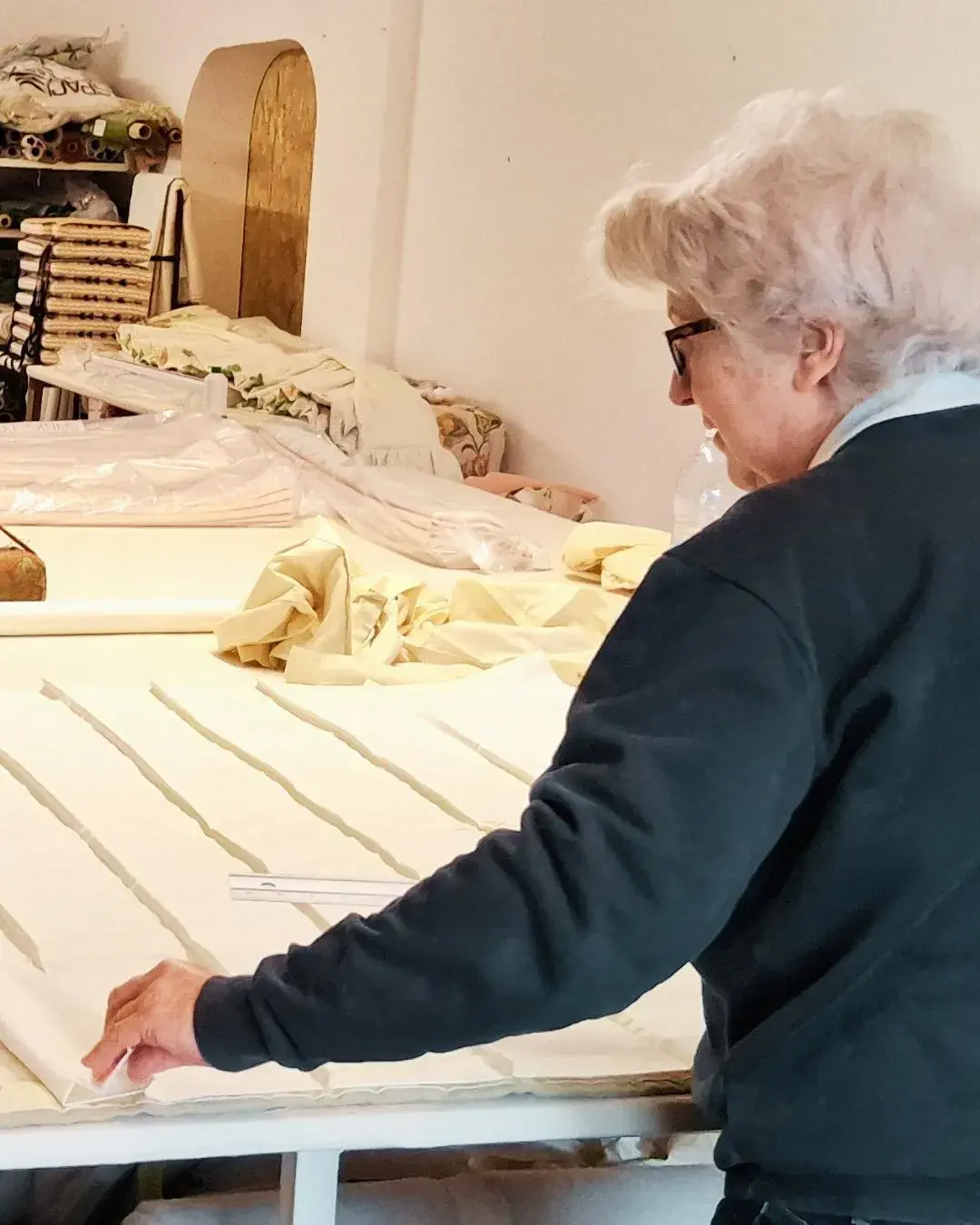
The fabric is then cut, matched if patterned, and applied by hand. On a patterned fabric, this requires particular care: the pattern must run consistently across the seat, the back, and the arms without interruption. A well-upholstered sofa shows no puckering, no pulling, and no compromise in how the fabric sits on the frame.
The final details of piping, trim, feet and castors are fitted last. We keep a range of finishes in the workshop, from turned oak legs to brass cup castors, and we're always happy to source something specific if the scheme demands it.
Delivery and beyond
We deliver within the Cotswolds and across the UK. For larger pieces, we always check access beforehand: there's nothing worse than arriving with a sofa that won't fit through the door. If access is tight, we'll discuss options in advance: removable legs, a delivery through a window, or in some cases a slight adjustment to the frame dimensions at the design stage.
A well-made bespoke sofa should last decades. When the fabric eventually tires, and all fabric does, given enough time, the piece can be re-upholstered on the same frame. Several of our clients have had sofas re-covered after fifteen or twenty years, and the frame underneath is as sound as the day it was built. That's the point of commissioning something made properly in the first place.
If you'd like to discuss a commission, we're at the Cotswold Design Centre in Broadway. Come and see the workshop: it's the best way to understand what we do.