Cotswold stone has a way of setting the terms. Its warmth — that particular honeyed tone that shifts from pale cream to deep amber depending on the quarry and the light — is not a neutral backdrop. It's a presence in the room. Any interior scheme for a Cotswold stone house needs to acknowledge this from the outset, working with the stone's character rather than attempting to override it.
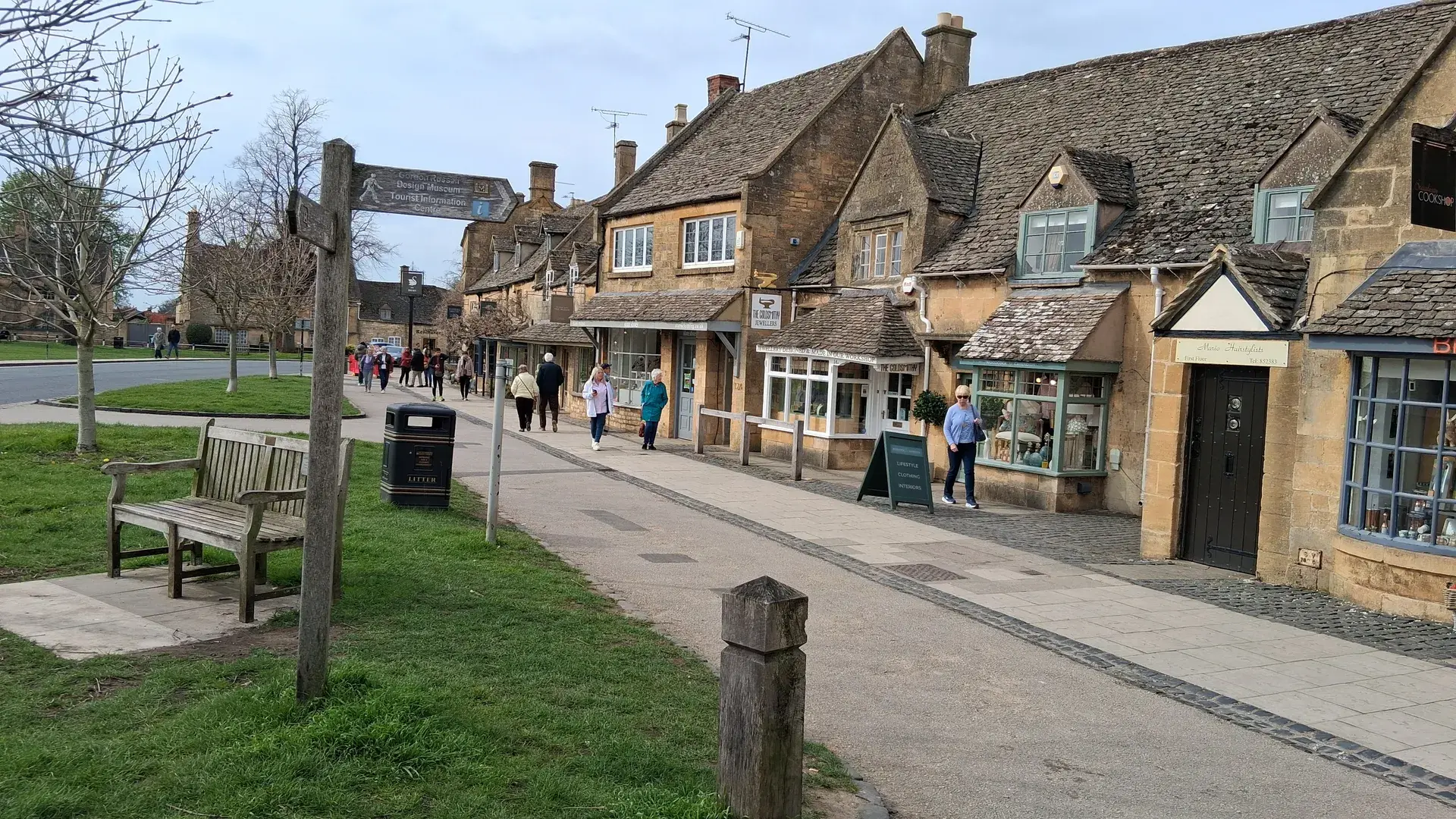
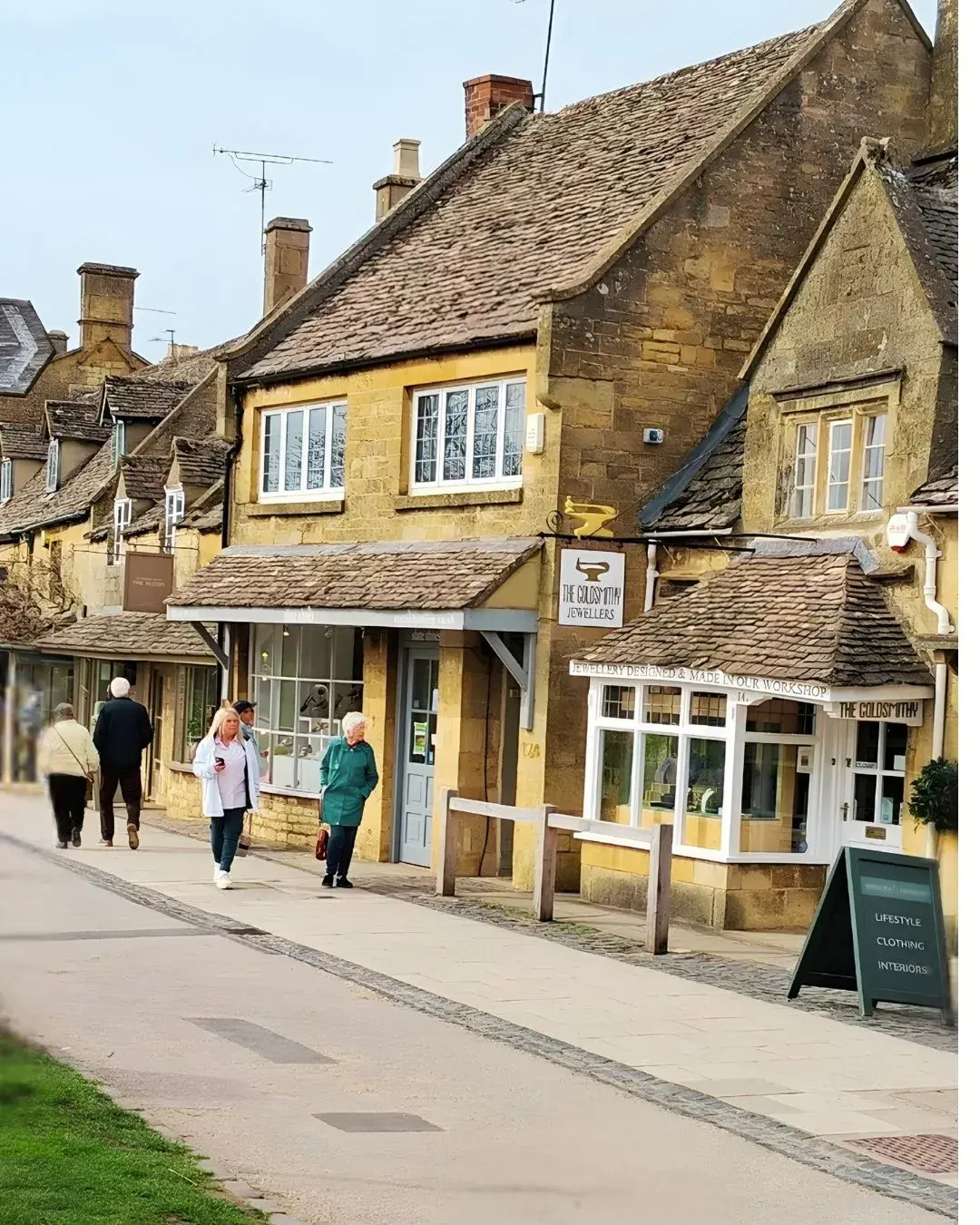
We've been designing for these properties since 1942, and the buildings themselves have taught us more than any design manual. Each house has its own light, its own proportions, and its own quirks. A seventeenth-century cottage on the high street in Broadway behaves entirely differently from a Georgian rectory on the edge of Chipping Campden. What they share is an architectural honesty that responds best to interiors of equal sincerity.
Light comes first
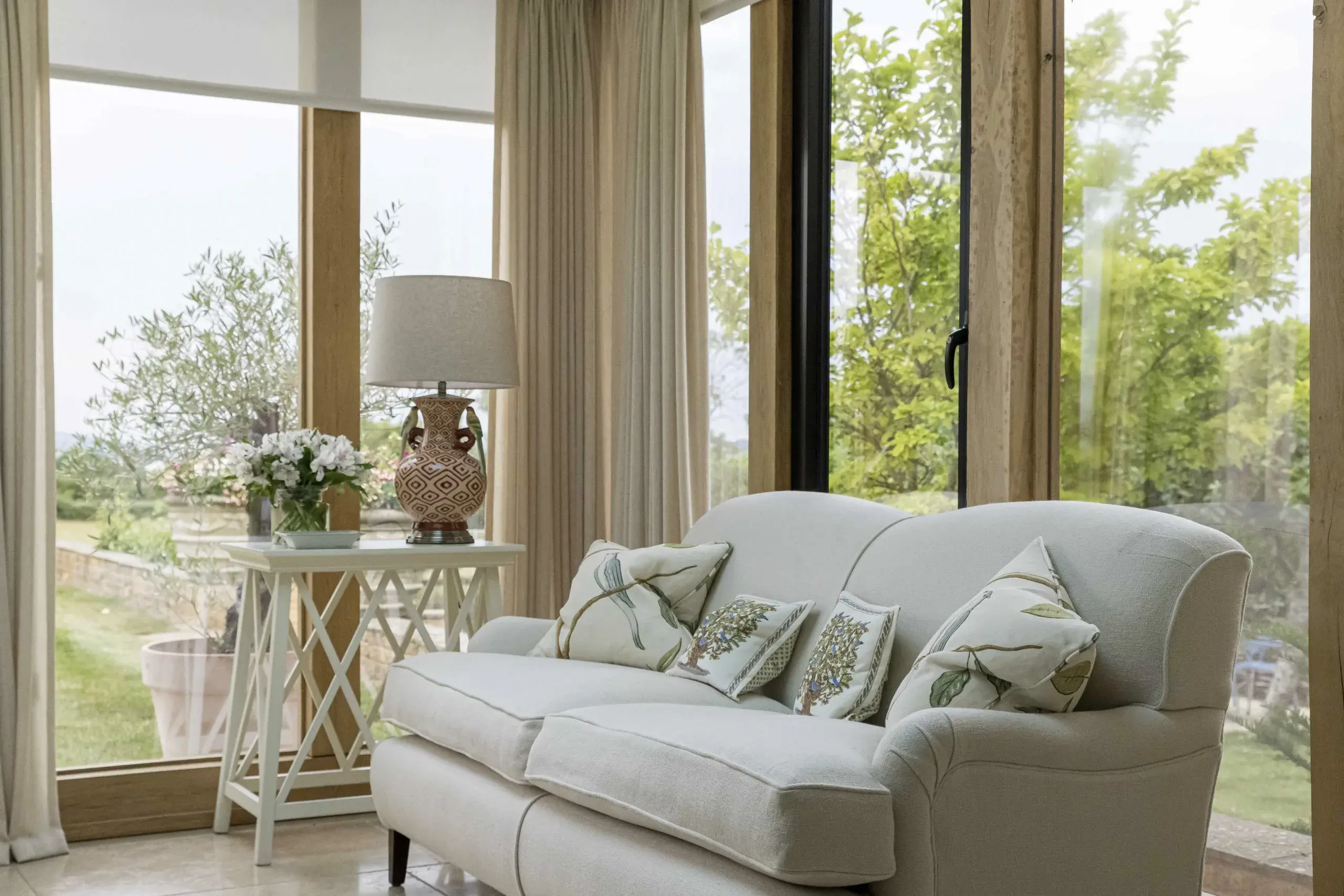
The single most important factor in a Cotswold stone interior is light. These houses were not built for large windows — mullioned openings, deep reveals, and small panes are characteristic features, and they control how daylight enters a room. In winter, when the Cotswold sky is low and grey, rooms can feel markedly darker than their summer selves. In high summer, a south-facing room can be flooded with warm, golden light that changes every surface it touches.
This means colour decisions must be tested across seasons and times of day. A paint colour chosen on a bright June afternoon will look entirely different on a dark November morning. We always recommend living with large paint samples on the wall for at least a week, observing how they behave as the light shifts. What looks soft and warm in the evening can look flat and cold by morning. Stone walls amplify this effect — they reflect and absorb light differently from plaster, and the texture of the stone creates its own pattern of highlights and shadows.
Colour and the stone
The Cotswold stone palette — those creams, buffs, and warm greys — naturally harmonises with certain colour families and resists others. Earth tones, muted greens, warm whites, and soft blue-greys tend to sit comfortably alongside the stone. They feel of a piece with the landscape outside the window.
Stronger colours can work beautifully, but they need confidence and purpose. A deep teal or a rich terracotta in a room with enough light to carry it can be magnificent against stone walls. What tends to fail is the middle ground — colours that are neither bold enough to make a statement nor quiet enough to recede. In a Cotswold house, commit to the colour or don't use it.
We find that the most successful schemes draw their palette from the immediate surroundings: the lichen on a stone wall, the green of the valley in spring, the washed blue of a winter sky. This isn't sentimentality — it's practical. Colours drawn from the landscape tend to sit well in rooms that look out onto it.
Proportion and scale
Many Cotswold properties have rooms with lower ceilings than their Georgian or Victorian counterparts. Ceiling heights of seven feet are common in older cottages, and even in larger houses the rooms are often more intimate than their footprint might suggest. This has implications for everything from curtain headings to furniture scale.
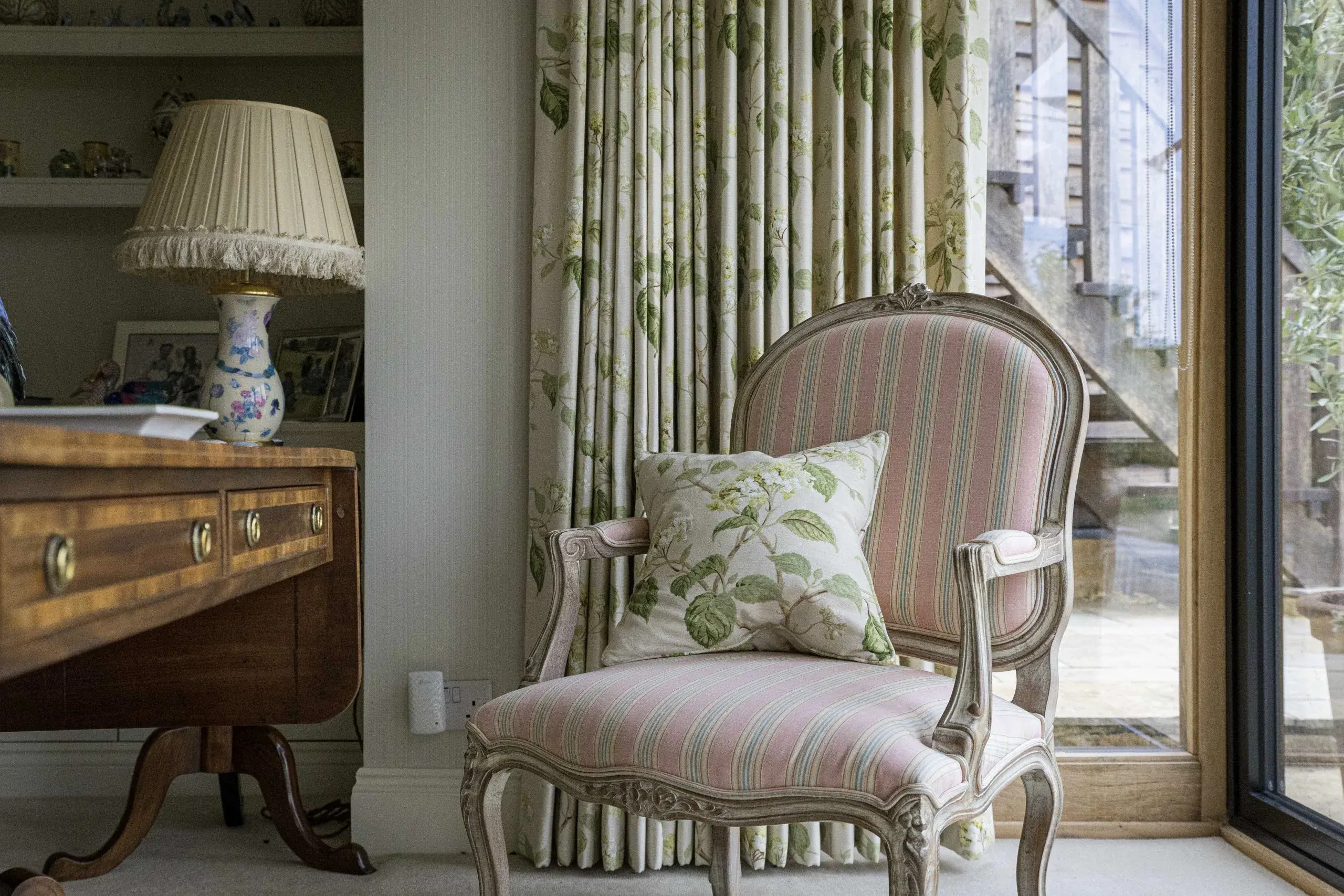
In a low-ceilinged room, a full gathered curtain heading can feel oppressive. A simpler heading — a wave, a pencil pleat, or a neat hand-sewn pinch — allows the fabric to hang without crowding the top of the window. Similarly, furniture needs to respect the room's vertical proportions. A tall wing chair that looks perfectly at home in a Georgian drawing room with ten-foot ceilings can feel overbearing in a cottage sitting room.
We always measure and assess rooms in person before specifying any furniture. Photographs are misleading — they flatten the space and mask the relationship between ceiling height, window size, and floor area. There's no substitute for standing in the room.
Working with period features
Original features — stone fireplaces, oak beams, flagstone floors, mullioned windows — are the architectural inheritance of a Cotswold house and should be treated with respect. This doesn't mean the interior must be a period recreation. Some of the most successful schemes we've worked on combine original features with contemporary furniture and modern comfort, creating rooms that feel both rooted and alive.
The key is coherence. A contemporary sofa can sit beautifully in a beamed cottage if the fabric, the scale, and the colour are right. An antique piece can look extraordinary in a room with clean, modern walls. What breaks a scheme is inconsistency — when the different elements feel as though they've arrived from different houses and different centuries without any conversation between them.
Stone floors deserve particular attention. They're beautiful but cold, and in the Cotswolds the temperature underfoot is a real consideration for much of the year. Well-chosen rugs — properly sized, properly placed — transform the comfort of a stone-floored room without hiding the floor entirely. We keep a considered selection of handknotted rugs in our Broadway showroom, and we're happy to bring pieces to a client's home so they can see them in context.
The Cotswold interior, honestly
The best Cotswold interiors share a quality that's difficult to name but immediately recognisable: they feel settled. Not designed to impress, not straining for effect, but comfortable in their own skin. The stone has been there for centuries. The beams have weathered and darkened. The windows frame a landscape that hasn't fundamentally changed in a very long time. The interiors that work best within these walls share that quality of quiet permanence.
This doesn't mean they're old-fashioned. It means they've been considered with the same patience and care that went into building the house in the first place. That's the standard we aim for — interiors that feel as though they've always been there, even when every element is new.