Most upholstery projects that go wrong go wrong at the fabric stage. The frame is sound, the workmanship is fine, but the fabric was chosen on looks alone and starts pilling, fading or wearing through within two years. After eight decades of upholstering furniture in our workshop, we can usually predict which fabrics will still look right in ten years and which will not. The good news is that you can too, because it comes down to a handful of checks.
Start with the martindale rub test
Every upholstery fabric sold in the UK should come with a martindale rating. It measures abrasion resistance: a machine rubs a disc against the fabric in a figure of eight and counts the cycles until the threads break or the surface changes noticeably.
The number tells you what the fabric can take:
- Under 10,000 rubs: decorative use only. Cushions and headboards, never a sofa seat.
- 10,000 to 15,000: light domestic. An occasional chair in a spare room.
- 15,000 to 25,000: general domestic. Fine for most living room furniture in an adult household.
- 25,000 to 30,000: heavy domestic. The right bracket for a family sofa that gets sat on every day, especially with children or dogs.
- 30,000 and above: severe contract grade. Built for hotels and restaurants, and effectively indestructible at home.
Our rule in the workshop is simple: for anything that gets daily use, do not go below 20,000, and if the household is busy, treat 25,000 as the floor. A beautiful fabric with a 12,000 rub count on a family sofa is money spent twice, because you will be recovering it within five years.
One caution: martindale measures abrasion only. It says nothing about fading, pilling or stain resistance, so it is the first check, never the only one.
Natural or synthetic
There is no single right answer here, only trade-offs.
Linen and cotton feel wonderful and age gracefully, but pure versions crease, wear faster and fade in direct sunlight. Wool is naturally resilient and flame resistant, drapes beautifully over traditional frames and lasts decades, but costs more and needs specialist cleaning.
Modern synthetic and blended fabrics have improved enormously. A cotton or linen blend with polyester or viscose keeps most of the natural handle while adding strength, and many chenilles and velvets now carry heavy domestic rub counts that pure naturals rarely reach.
For a sofa that gets used every day, a natural blend is usually the sensible middle ground: the look and feel of the natural fibre, with the durability numbers to back it up. Save the pure linen for the bedroom chair.
Plains, checks, stripes and tickings
Pattern affects two things people forget until the quote arrives: meterage and matching.
A plain fabric is the most economical to upholster. A typical two seat sofa needs somewhere around 12 to 14 metres of plain fabric, depending on the frame.
Patterned fabric needs more, because every panel has to be cut so the pattern aligns across the seat, back and arms. The larger the vertical repeat, the more waste. A large check or a bold floral can add 15 to 20 percent to the meterage, and it also demands more of the upholsterer, because a check that drifts off line across a seat cushion is the first thing your eye finds.
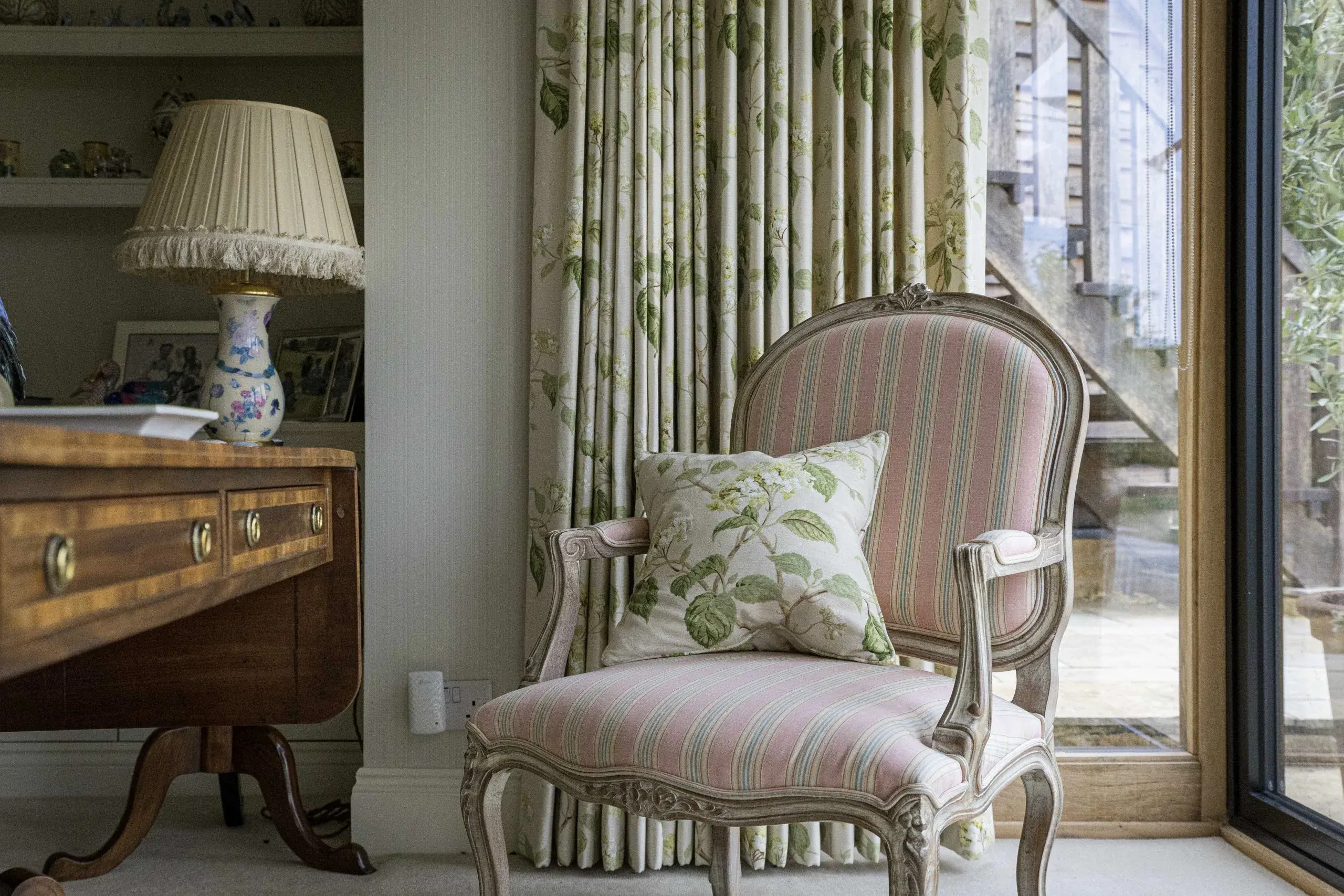
Stripes and tickings sit in the middle: they need matching along one axis, so the extra meterage is modest, and they suit both traditional and contemporary frames. If you want pattern without the cost of a large repeat, a woven stripe or ticking is the practical choice.
Whatever you choose, ask whether the pattern is woven or printed. Woven pattern goes through the cloth and wears evenly. Printed pattern sits on the surface and can rub away on high wear points like arm fronts.
Weight, weave and the checks we run
Beyond the label, a few hands-on tests tell you a lot. Hold the fabric up to the light: a loose, open weave will let light through and will not hold its shape over a sprung seat. Rub the surface firmly with your thumb for thirty seconds: if fibres lift or ball, it will pill in use. Scrunch a corner and let go: if it holds a hard crease, it will crease on a seat cushion too.
And always look at the fabric horizontally, not just on the roll. Fabric on a sofa lies flat across seats and curves over arms. Colour and sheen read differently in that orientation, particularly on velvets and chenilles where the pile direction changes the shade entirely.
Order samples, then live with them
Never commit from a photograph or a shop's lighting. Order proper samples, take them home and put them where the furniture will sit. Look at them in morning light and lamplight. Drape them over the arm of the existing sofa. Leave them there for a week. The fabric that looked right in the showroom and still looks right on the seventh evening at home is the one to order.
If the sofa faces a south facing window, check the fabric's lightfastness rating as well, and consider how the colour will soften over years of sun.
Getting it right first time
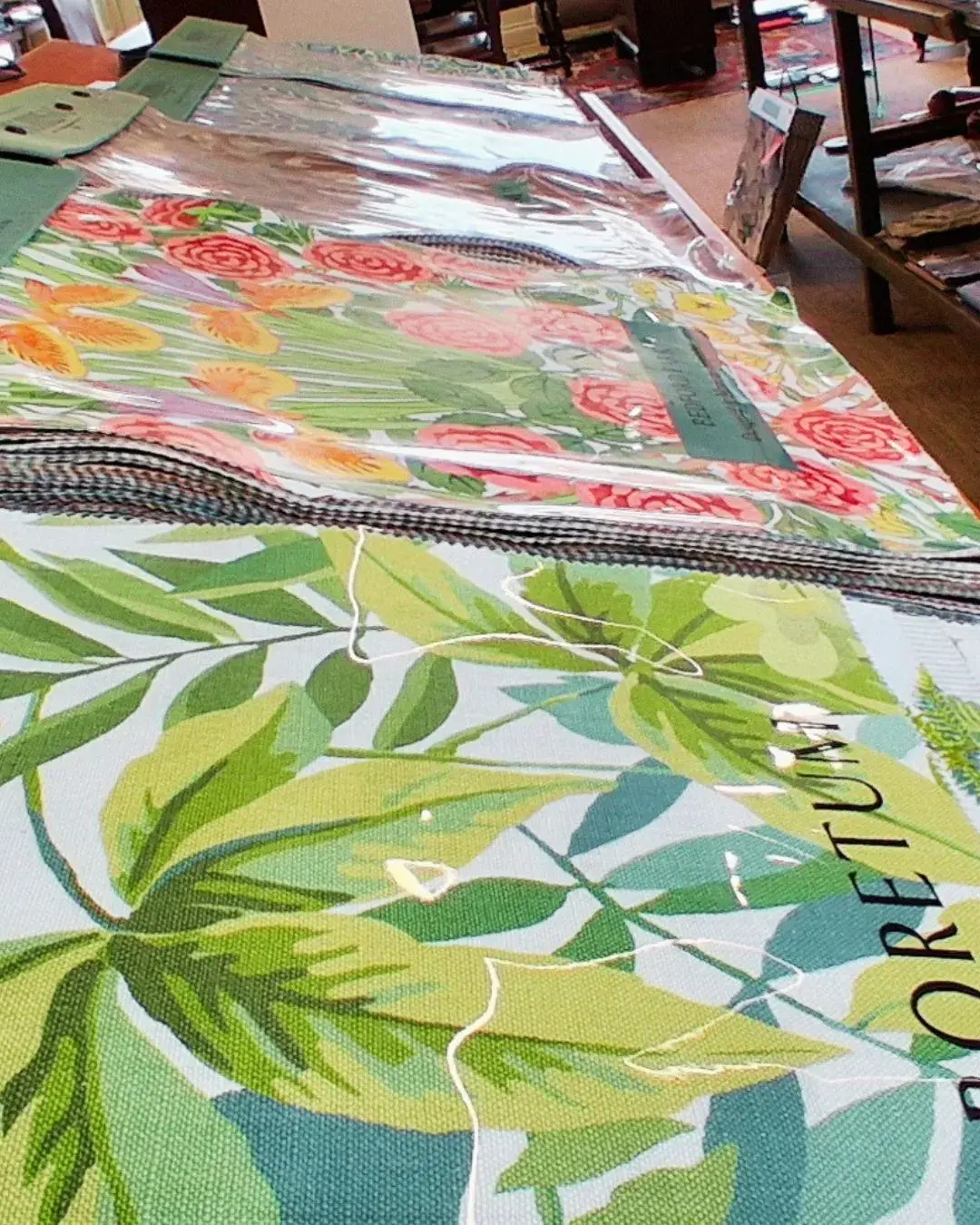
We have been upholstering furniture in our own workshop since 1942, and fabric selection is where we spend the most time with clients, because it is the one decision that cannot be adjusted afterwards. Our fabric collection covers plains in a full range of colours alongside woven checks, stripes and tickings, all selected to meet the rub counts that daily furniture demands, and every one is available as a sample before you commit.
If you would like a hand narrowing it down, bring your room photos and measurements into our Ludlow showroom and we will pull samples with you, or browse the collection and order fabric online. Either way, choose the fabric with the same care as the furniture underneath it. It is the part you touch every day.